Current Nature: Weathering The Storm
Article first published on Nantucket Current.
These winter storms have pummeled the island, delivering frigid temperatures and a blanket of snow that has since hardened into an icy crust. While many of us have faced the maddening tasks of shovelling out our driveways and defrosting cars, what has nature been up to? How have our flora and fauna fared? Surely this major snowfall has impacted the natural world… or has it?
While this weather may seem harsh to us, for the island’s native plants and wildlife, it is a defining feature of life. Beneath the layer of snow, Nantucket’s ecosystems are actively responding, relying on adaptations shaped by generations of exposure to wind, salt, and cold.
Woody shrubs like bayberry, scrub oak, and huckleberry have impressive endurance. Snow can often act like a blanket, protecting the plant from further plummeting temperatures and abrasive winds. Scrub oak’s flexible branches bend under snow instead of breaking, and its tendency to hold onto dead leaves (called marcescence) can actually trap snow, helping to insulate the buds. Bayberry is a semi-evergreen shrub, holding on to some of its leathery leaves in winter. As we near the end of winter, the leaves may appear brown and battered, but that is more of a protective response rather than damage. And while huckleberry branches may suffer some die-back after long, harsh winters, its extensive underground stem system, called rhizomes, produces both aerial stems and roots, ensuring that the plant rarely suffers long-term harm.
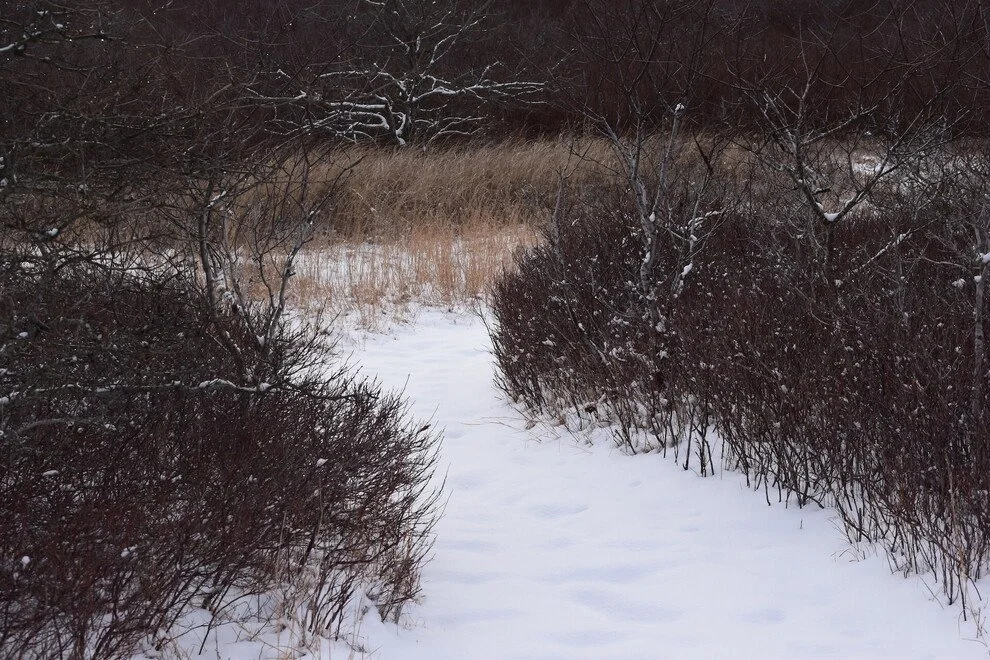
Snow blanketing our native huckleberry at LLNF. Photo by Saoirse McCarthy.
Birds can often be one of the most obvious indicators of how wildlife responds to winter weather. You may have seen birds around the island looking extra fluffy recently. They fluff up their feathers, creating pockets of air close to their bodies, which helps to trap this warmer air and act as insulation. This American Woodcock was seen in a yard foraging for food. Snow is one of their biggest winter challenges. They are ground-feeders and rely solely on probing the soil for earthworms. The current ice crust coating the majority of the island is sure to affect their efforts at finding food. Woodcocks are quick to relocate when conditions like these persist and will seek out areas where the soil remains workable. Woodcocks typically migrate further south for the winter; however, some do remain on Nantucket during the colder months. The island's winter climate is usually mild enough for these birds to survive. This year, though, the winter is shaping up to be much harsher. By witnessing this behavior of the woodcock, it may serve as a reliable indicator of the severity of winter conditions.
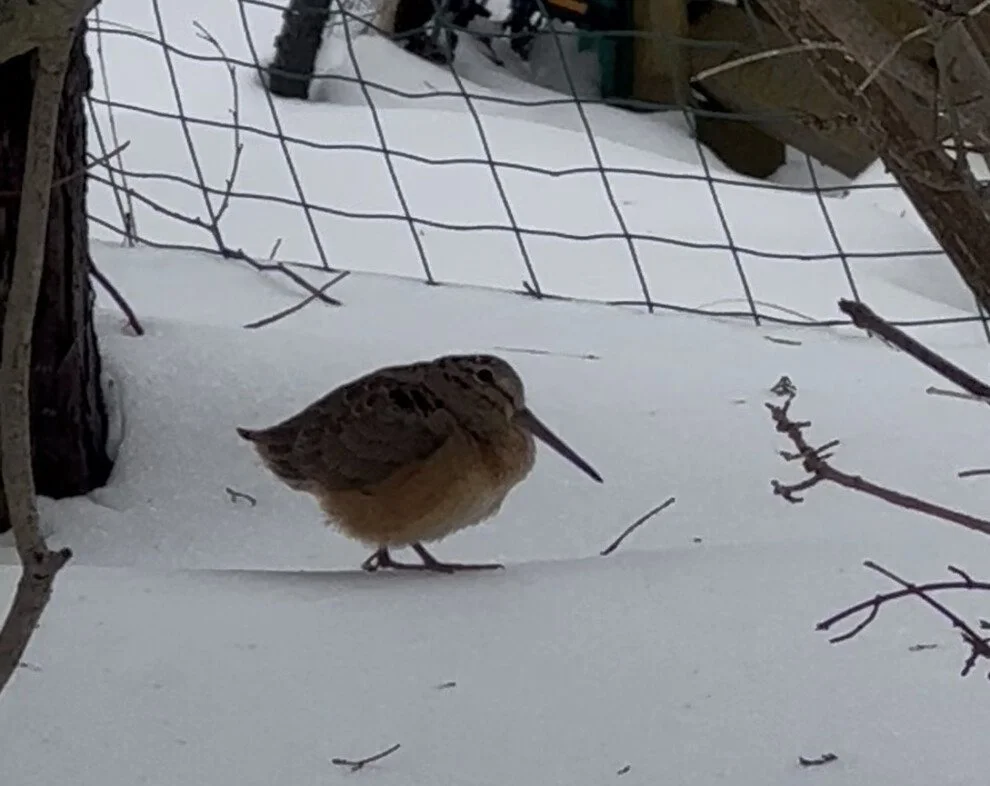
American Woodcock seen foraging for food in the snow. Photo by Saoirse McCarthy.
Instances like this are a good reminder that a little helping hand goes a long way. Filling your bird feeders or sprinkling out seed and mealworms can make a huge difference for our wonderful birdlife here. For those who are snowed in and looking for things to do, Project Feederwatch is a great way to pass the time and contribute to science! This project engages people in observing birds and mammals that come to their feeders and can be done from the comfort of home. It is a fun and rewarding activity, with your observations providing real data and unique insights into backyard birds. For more detailed instructions on how to get involved, you can check it out here.
For those willing to step outside between storms and walk along the trails, winter provides an opportunity to witness nature’s resilience firsthand. Fresh snow gives us a behind-the-scenes look at wildlife on the move, and spotting tracks can turn into a fun guessing game. By observing how Nantucket’s plants and wildlife fare through the winter storms, we develop a greater appreciation for their often-overlooked strength that endures each storm, year after year.
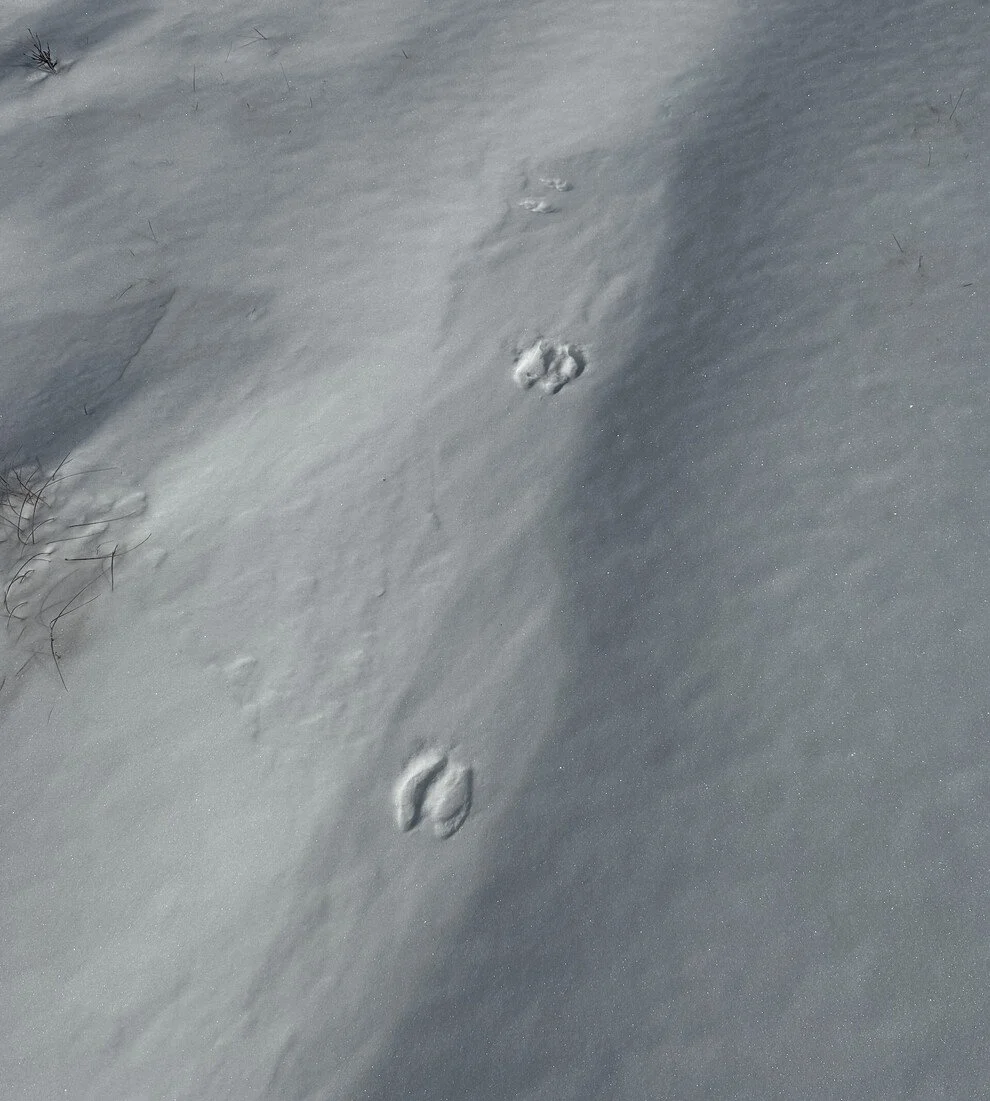
Deer tracks seen along Linda Loring Nature Foundation’s trails. Photo by Saoirse McCarthy.