Current Nature: Inside A Bird's Winter Survival Kit
Article first published on Nantucket Current.
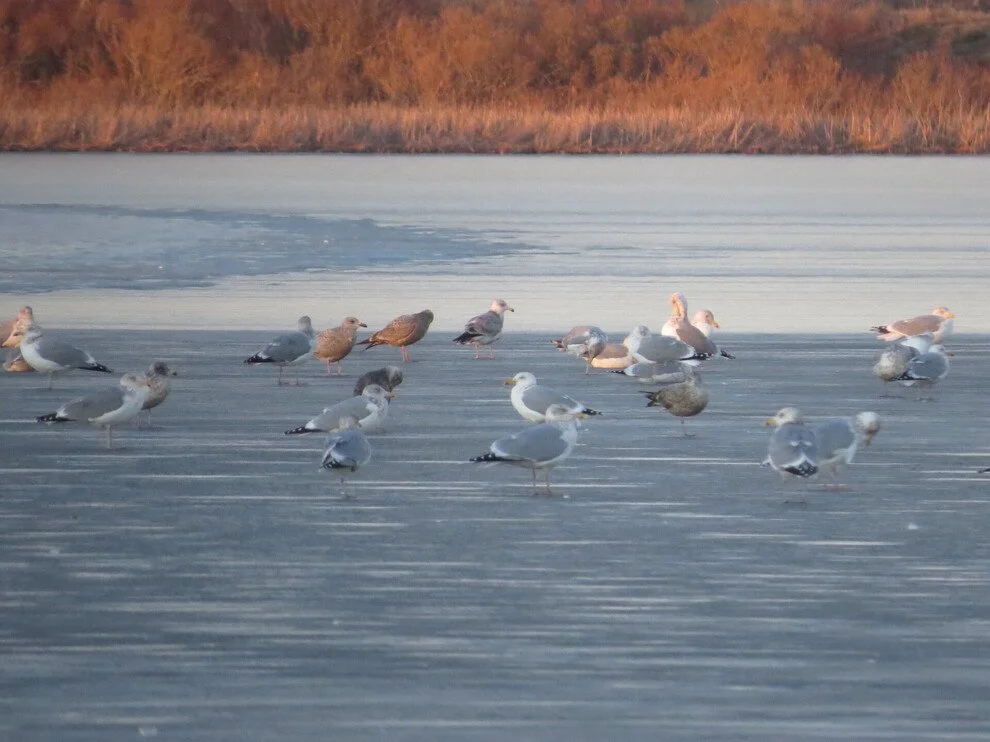
A flock of herring gulls standing on the ice at the North head of Long Pond. Photo by Libby Buck.
This winter, the cold on Nantucket has been particularly intense. In recent years, many of our winters have been relatively mild, with open water lingering well into January and February. This year, the harbor froze so thick that the U.S. Coast Guard Cutter had to carve a path for the ferries. Watching that happen makes you realize just how locked in the island can become. For us, it means ferries that cannot run and plans put on hold. For birds, it means moving, gathering, and adapting to the cold.
Look closely, and you will see it everywhere. Gulls stand along the frozen harbor edge while ducks gather in the last open water on ponds locked in ice. Offshore, the sea ducks raft together on the open ocean of Nantucket Sound. In backyards across the island, songbirds continue their steady visits to feeders, especially before another snowfall.
One reason birds can withstand these conditions is that they run warmer than we do. Most birds maintain a body temperature between 104°F and 108°F, which is far hotter than a human’s. The warmth provides a built-in cushion against cold air and icy water. Their winter feathers trap air near the body, providing insulation that works much like a down jacket. Many will also stand on one leg, tucking the other foot up into their feathers to keep it warm.
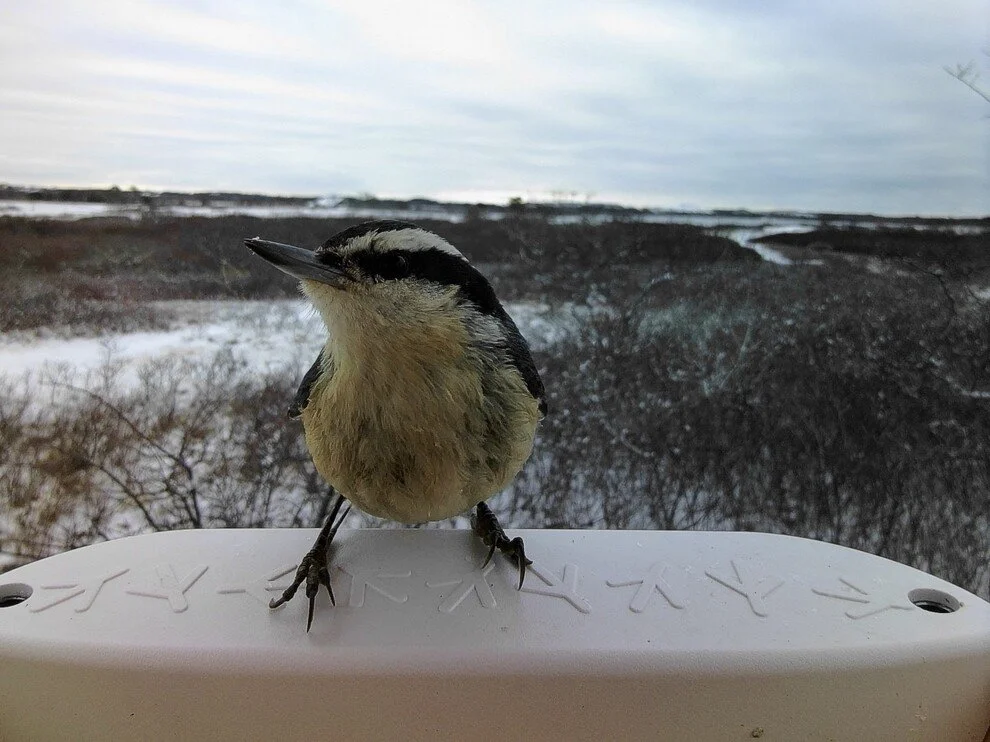
A red breasted nuthatch grabbing a quick snack at the LLNF Bird Buddy feeder. Photo by Libby Buck.
At some point, most of us have wondered the same thing. How can birds stand on ice without freezing? Gulls and ducks keep their bodies warm while allowing their feet to cool down. Inside their legs is a specialized network of blood vessels arranged closely together. Warm blood flowing down toward the feet passes alongside colder blood returning to the body, allowing heat transfer before it is lost. By the time the blood reaches the foot, it has cooled, which means less heat escapes into the ice. Meanwhile, blood traveling back to the body is warmed again before reaching the core. This system retains most of the warmth where it is needed while still delivering enough blood to the feet to prevent them from freezing. Also, their feet are mostly bone and tendon, which makes them far more tolerant of the cold than ours.
When ponds freeze, birds adapt and move to areas with better conditions. Ducks gather in the remaining open water or move toward tidal areas where salt and water movement delay freezing. Offshore sea ducks raft together in large flotillas, reducing wind exposure and staying close to food that remains available beneath the winter waves.
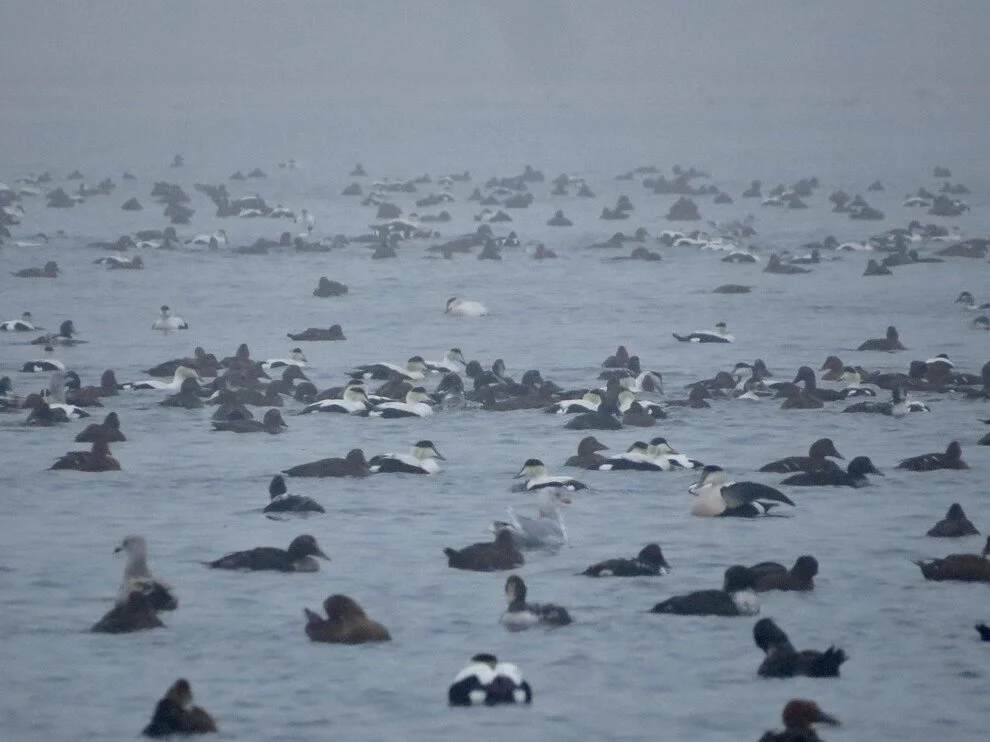
A raft of common eiders huddled together for warmth and food. Photo by Libby Buck.
If you would like to help the birds this winter, simple actions can make a real difference. Keeping your feeders filled with high-energy foods like sunflower seeds and suet provides important fuel for them during the cold snaps. A heated bird bath can be especially helpful when natural ponds and puddles freeze over. Even clearing snow beneath the feeders gives the birds easier access to fallen seed. Small efforts in our own yards can offer steady support during the coldest weeks of the year.
Through both mild winters and deep freezes, birds continue to adapt. With a little help from us, they have just a bit more support when they need it most.