

Launched in 2025, the Nantucket Osprey Watch Program is an exciting community science effort led by the Linda Loring Nature Foundation to study and support the island’s Osprey population. This project relies on the help of community members to observe, document, and raise awareness for the Osprey that nest across Nantucket.
Explore Nantucket’s Osprey Nest Map
Help with Monitoring Efforts
-
Report a New Nest
Found an Osprey nest that’s missing from the Nantucket Osprey Watch Map?
Let us know!
-
Nest Check
Every nest check provides valuable scientific data on Nantucket’s Ospreys.
Submit your observations below!
-
Become a Volunteer
We rely on volunteers like you!
Adopt a nest and help monitor Ospreys for the 2026 season!






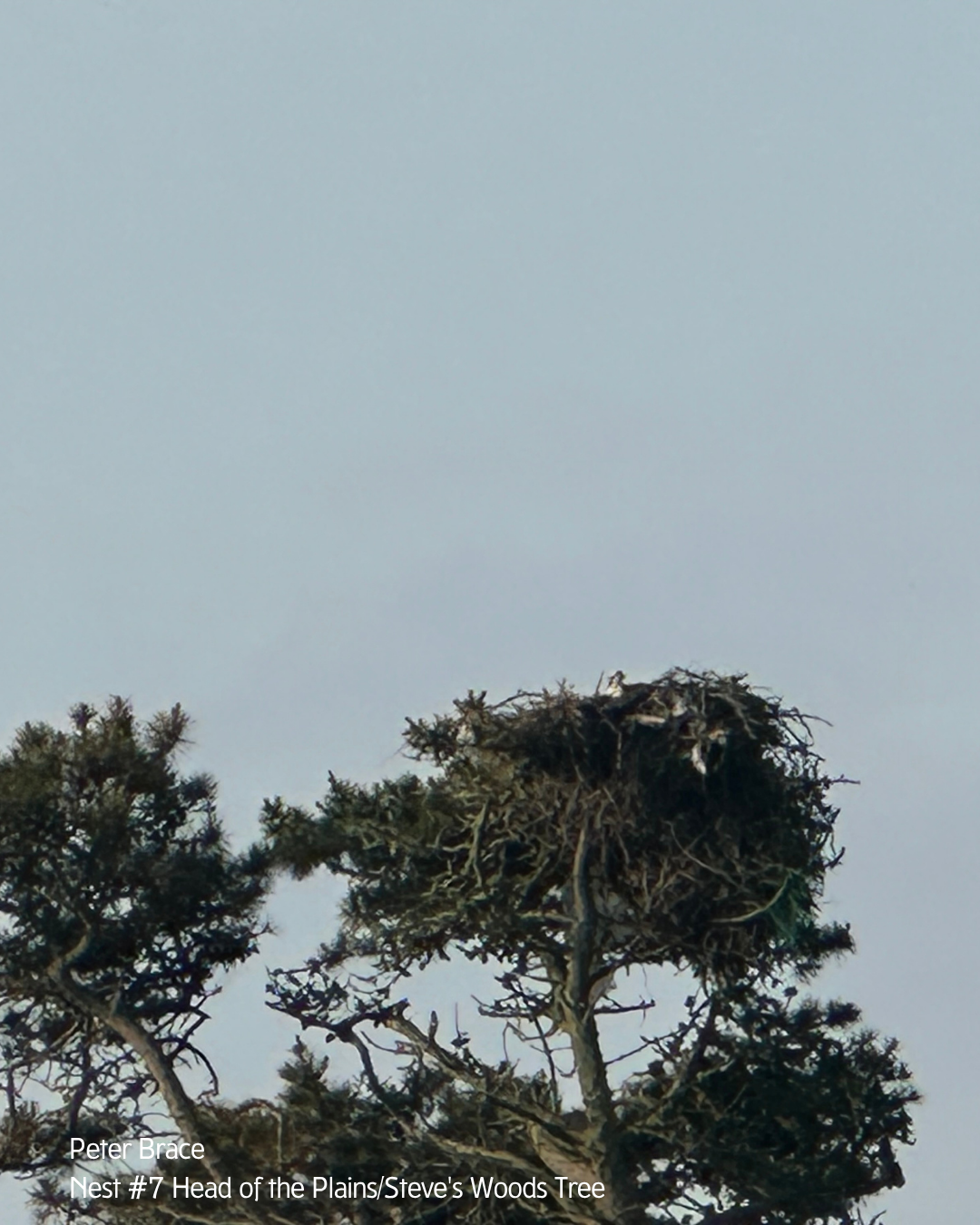


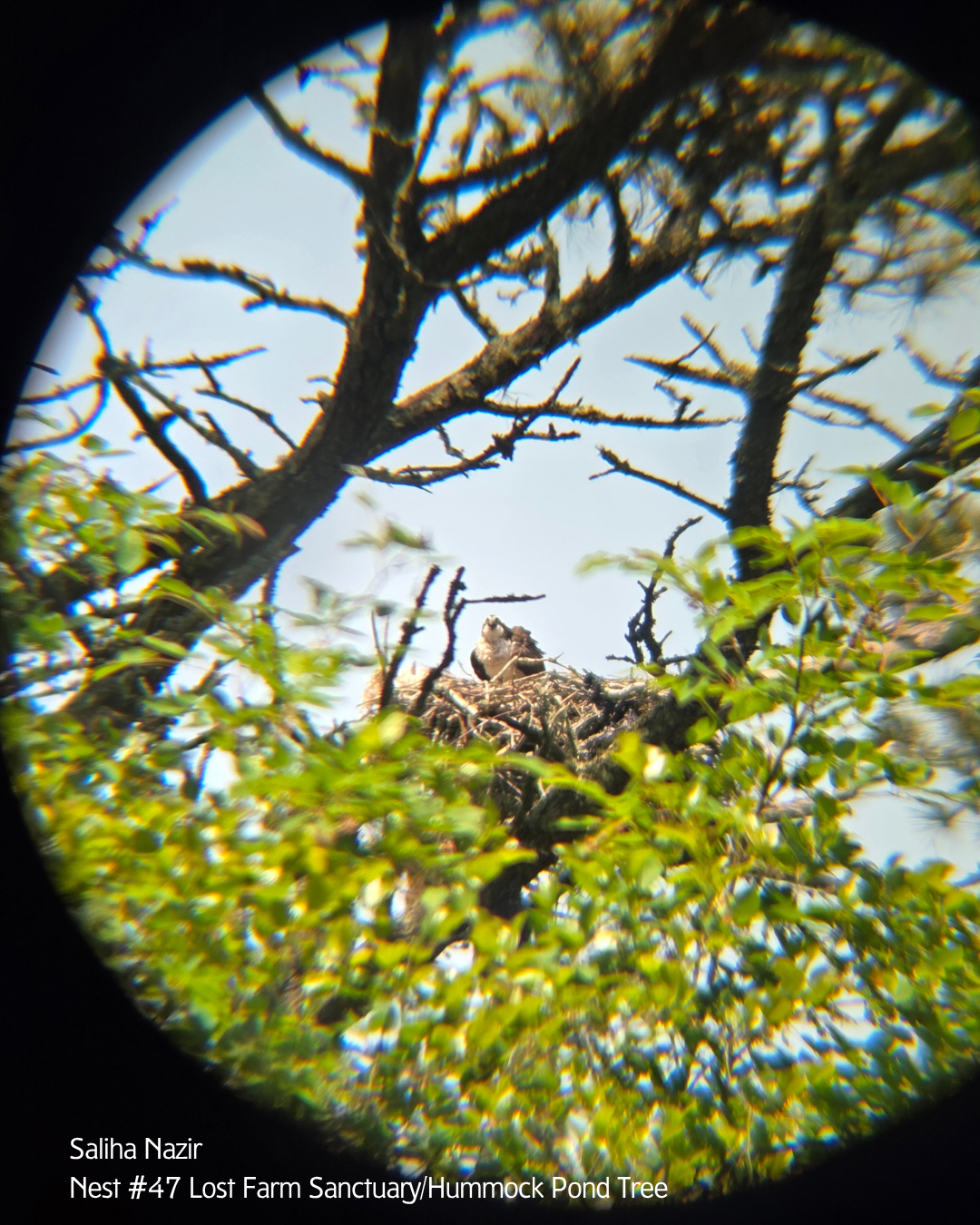
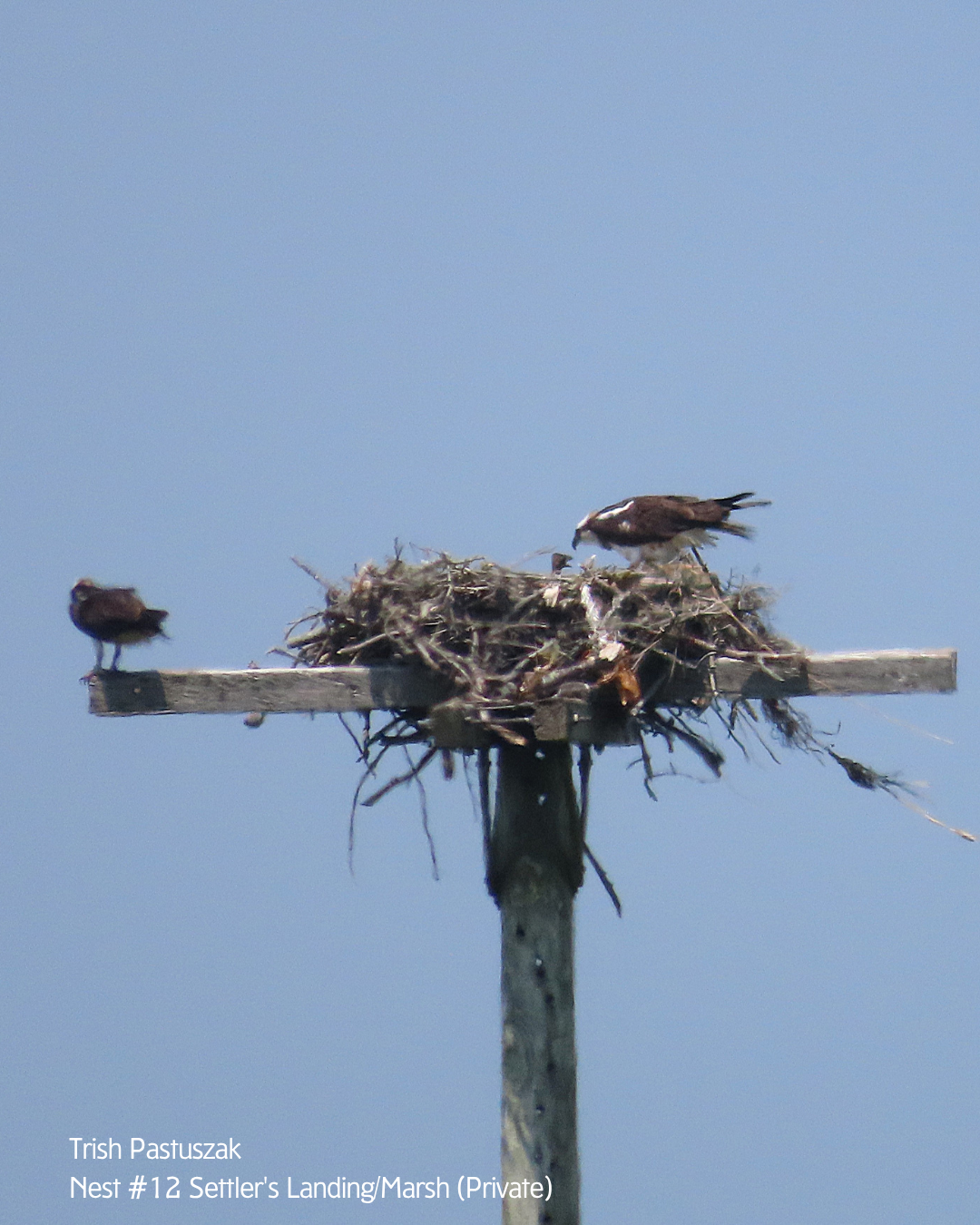


Monitoring Guidelines
-
Nests should be monitored weekly for 15 minutes.
-
April - July are high-priority months for nest monitoring, when activity is at its peak.
-
We strongly encourage taking photos and submitting them with your nest check. Your photos may appear on our website, social media or end of year report!
Identification
• Wingspan of up to six feet
• Approximately 2 feet long
• Plumage is mostly dark brown on top and white underneath
• Black, sharply curved bill
• White crown and head, a dark band extending back from its eyes
• Yellow eyes
• Female larger than male
• Female has speckled brown necklace across upper chest
• 4 toes with long black talons

Habitat
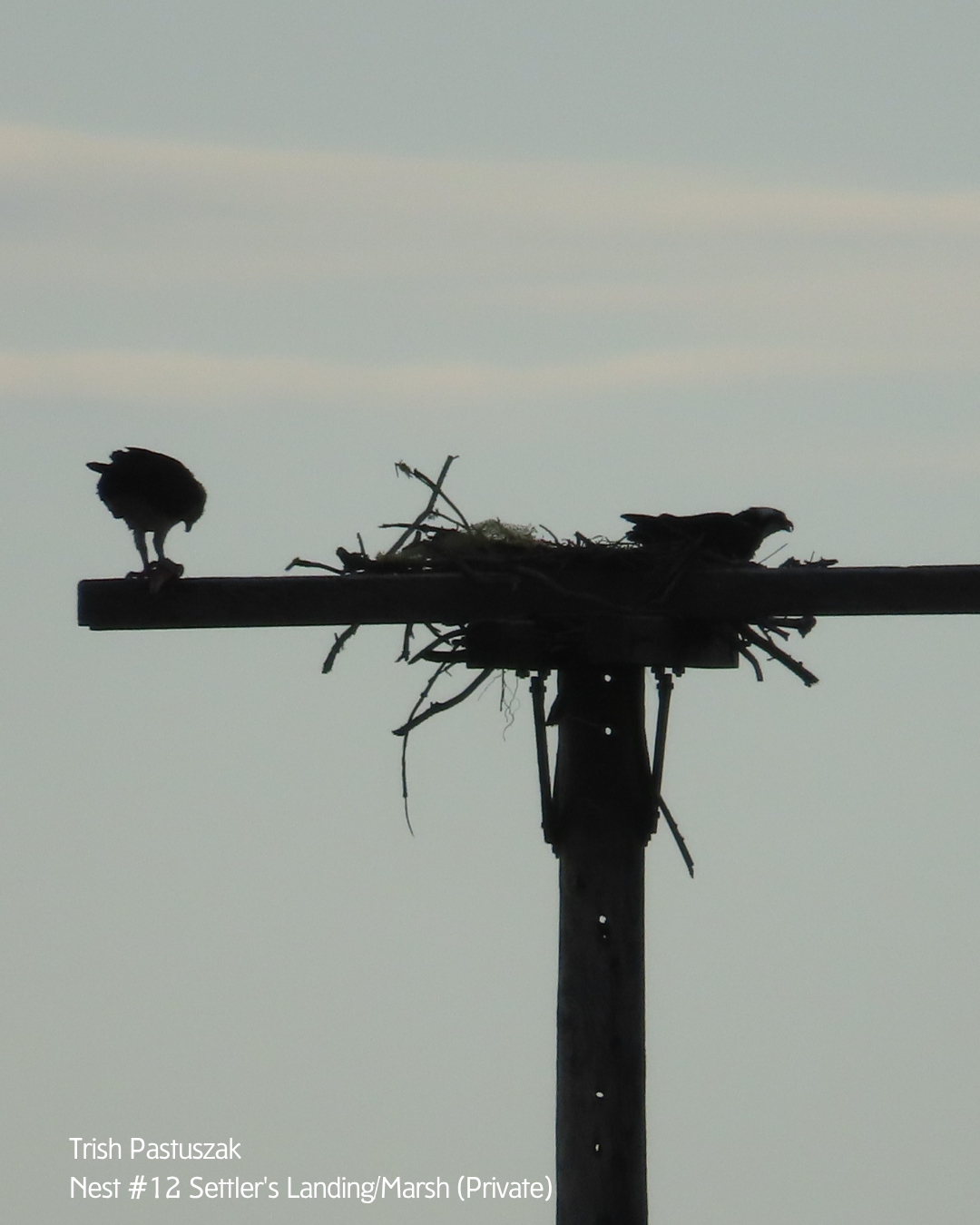
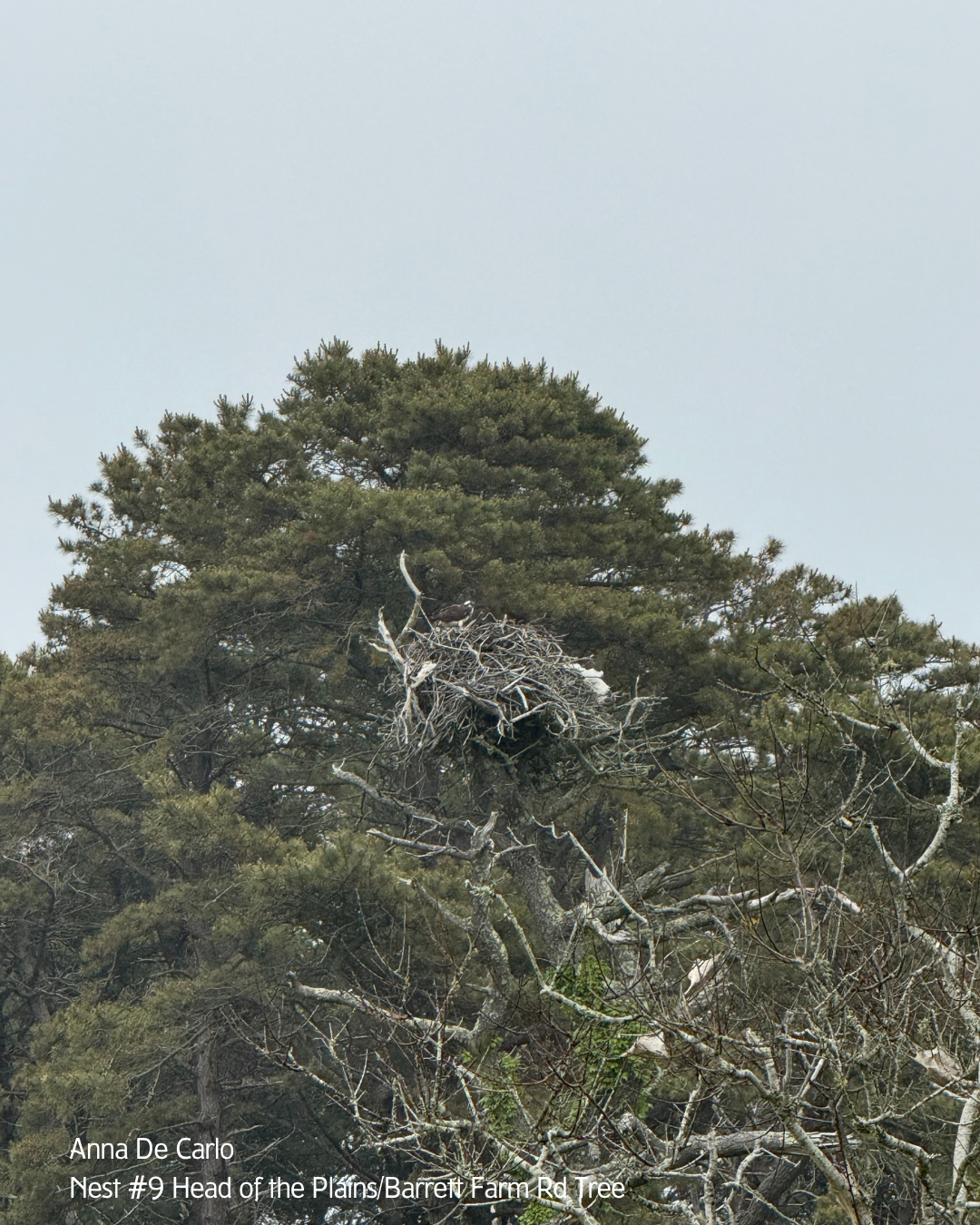
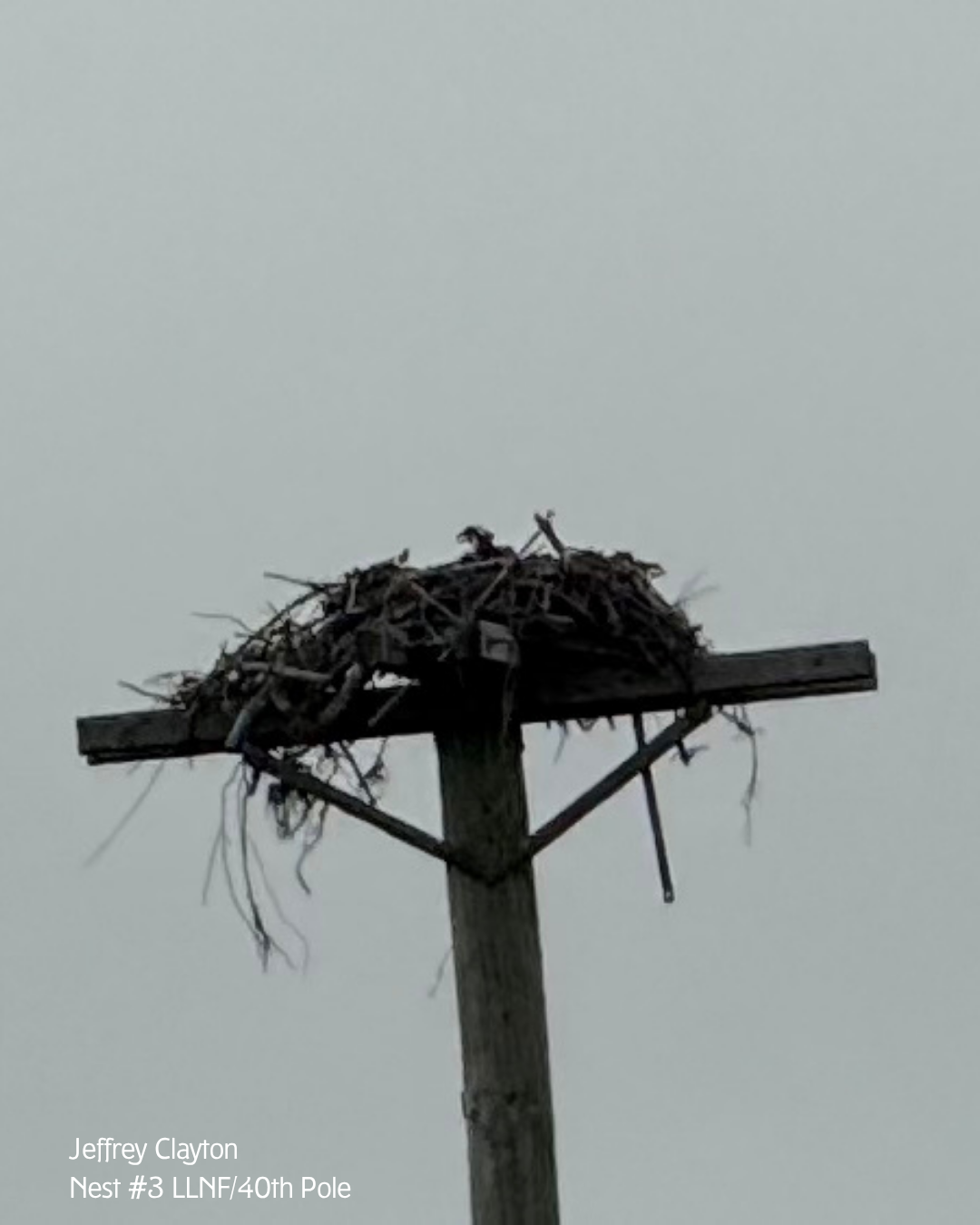
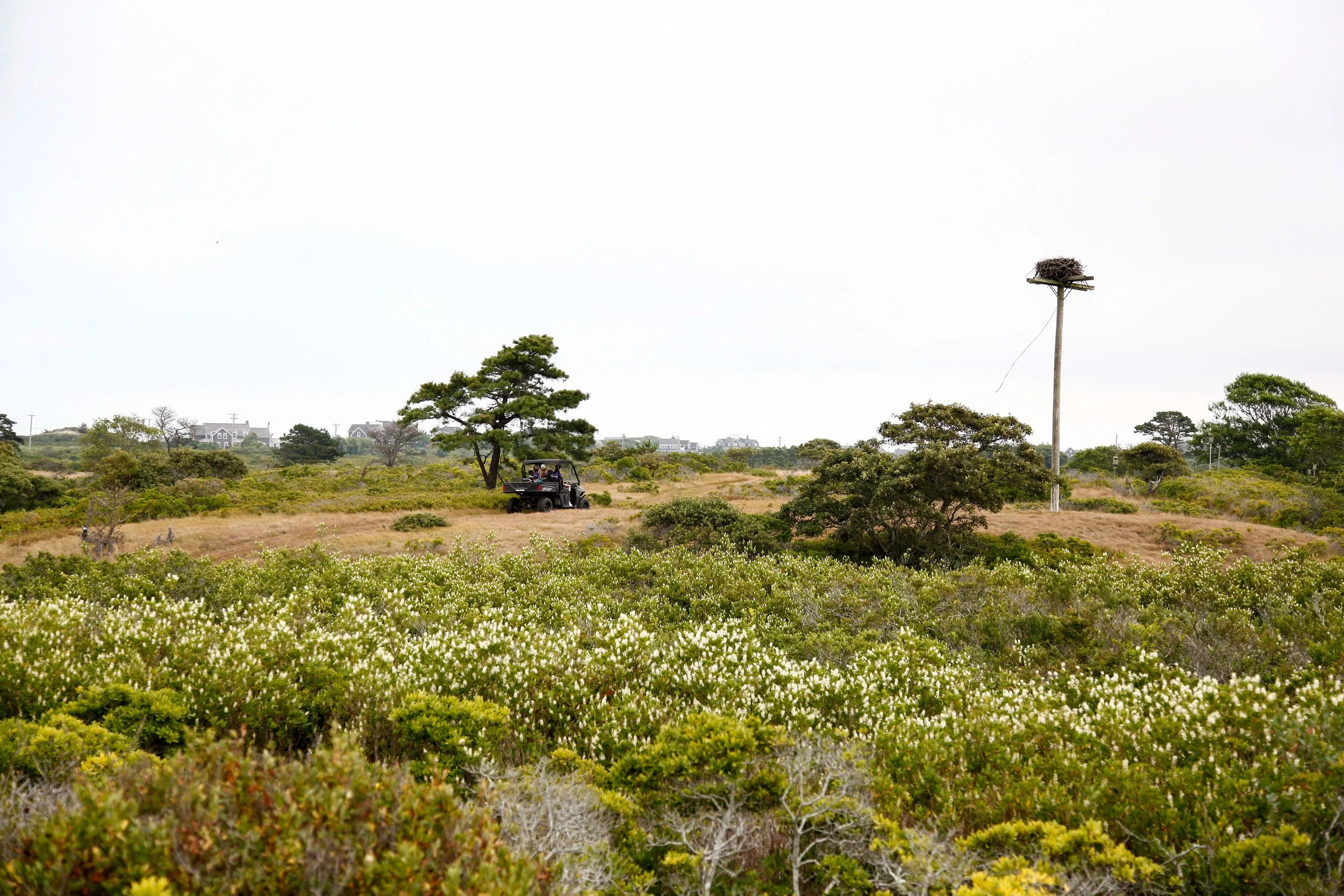
Nests are made of branches, shoreline debris, and other organic (and sometimes inorganic) materials. Nests are naturally located near water on live trees and dead snags, but on Nantucket, nests are exclusively found on manmade structures like nesting platforms, viewing stands, and roofs.
History of Osprey on Nantucket
Ospreys have made a remarkable comeback since the ban of DDT, but there is still much to learn about their nesting success and habitat use on Nantucket. In North America, Ospreys occur in all 50 states, but their populations plummeted between the 1950s and 1970s due to the unregulated use of pesticides like DDT. These chemicals caused eggshell thinning, leading to widespread nest failures. Thanks to new regulations on pesticide use in the 1970s, Osprey populations began to rebound across the continent—including here on Nantucket.
The island’s first recorded Osprey nest was in 1979, and the population has grown every year since. Thanks to the work of researchers—especially the Maria Mitchell Association’s Dr. Robert Kennedy—we have valuable data on Nantucket’s Osprey population from 1979 to 2015. Early research shows that Nantucket Ospreys initially nested only on man-made platforms. However, they’ve now expanded to a variety of nesting sites, including old trees (their original preference), rooftops, radio tower poles, and even beach dunes.